Episode Transcript
[00:00:12] Speaker A: Hi, thank you so much for listening to this practice note which introduces the collective document Wisdom on Living with Loneliness from elder care residents.
My name is Chelsea Sighs and I work as a spiritual care coordinator for Eldercare, which is an organisation with which has residential aged care sites across South Australia, including on the lands of the Kaurna people, the Perrimac people and Narunga people. I would like to pay my respects to the elders of these lands on which I work and also live.
In this practice note, I will be talking about the creation and generation of stories for this collective document, some of the narrative ideas which informed us, the process of working with a large organisation and some of our ongoing hopes for the booklet.
It would be so wonderful if you get a chance to read our booklet and share it with your communities. It is included in this edition of the journal.
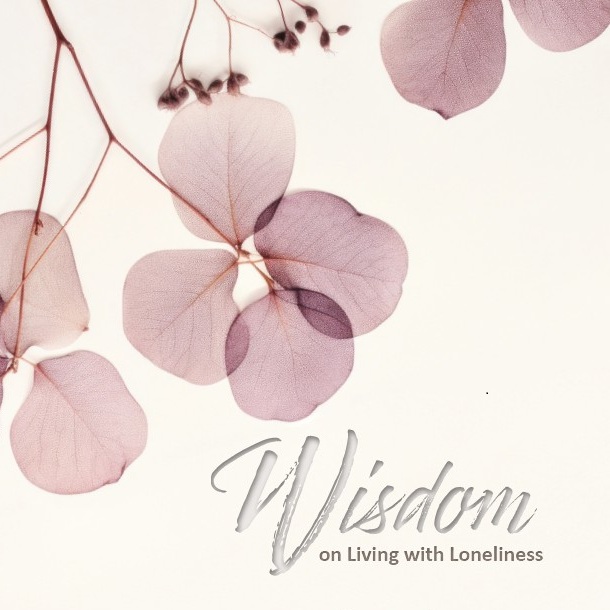
Wisdom on Living with Loneliness is a collective document that was created through many conversations with older people who are living within residential aged care.
Over a six month period of time we talked with over 50 residents who were living across six different aged care sites in metro Adelaide.
This process was a really collaborative one and I worked to coordinate the initiative with spiritual care practitioners who worked at each site.
Going back to the beginning. This initiative actually started with a spark of an idea between myself and a colleague, Lee, who works as a wellbeing coordinator. In early 2024, Lee was presenting a report on the feedback that elder care was getting from residents through a wellbeing assessment, specifically about their experiences of loneliness.
I remember after this presentation an excited conversation between us in the hallway talking about how maybe a collective document could be a wonderful way way to take this organisational quote data and richly describe older people's experience of living with and getting through times of loneliness in a large organization of 2,000 staff members and over a thousand residents. I actually wondered how we might navigate coordinating a kind of collective narrative approach in this setting within my role and within the organisation. We had never done a collective role narrative document on this scale before, so it got me thinking of other narrative practice colleagues who were working with collective practices in perhaps more unlikely scenarios.
I thought about my colleague in Aotearoa, New Zealand, Mark Truedinger, who'd been working with narrative approaches in communities in the context of disaster recovery and publishing collective narrative documents that that would have probably otherwise been pretty stale government pamphlets.
In describing this, Mark wrote, instead of the familiar organizational process of undertaking a needs assessment, evaluation and analysis and then providing some kind of prescription for what others should do, narrative approaches ask people about people's own skills, knowledges and preferences for living, linking these to what people give value to their histories, cultural practices and so on.
So thinking more about this, I thought, yes, collective narrative documents are so diverse. They can be so diverse. And I thought we really have nothing to lose because we can print out these documents from our computers at work and distribute them one by one to Resonance or or in small groups. We didn't even need to publish something officially. There are so many possibilities.
So from the very beginning of developing this initiative, the Spiritual Care team discussed the importance of developing a document that would really attend to and resist some of the taken for granted ideas about older people, especially those who are living in residential aged care or have a diagnosis of dementia.
In our Western society, so obsessed with productivity, independence and progress, even the process of aging or frailty is viewed as a personal failure or an inherent weakness.
It reminded me of the classic quote from Michael White on addressing personal failure.
Michael White wrote, the phenomenon of personal failure has grown exponentially over recent decades.
Never before has the sense of being a failure to be an adequate person been so freely available to people, and never before has it been so willingly and routinely dispensed.
In thinking about the operations of modern power and personal failure, I recognise that there are so many people that I was talking to, older people living in aged care who experience this sense of personal failure, this sense of being socially or relationally invisible because they felt like they were no longer able to contribute. Their skills, wisdom and knowledges were not acknowledged and so their dignity and value as a human was therefore diminished.
I noticed that these discourses around aging bodies and the place of older people in Western societies were actually operating in relation to discourses around loneliness. They were not operating in isolation, and people's accounts of loneliness highlighted the intersections of age, gender, and also social status, amongst other things.
In our preparation for conversations with older people about their experiences of living with loneliness and their skills and knowledges of responding to it, it was important for the Spiritual Care team to have that zoom out in consideration of the discourses that surround loneliness and ageing.
Sociologist Barbara Barbossa Neves and colleagues describe how important it is to understand loneliness and its stigma as a social system, process, practice, consequence, not merely as an individual construct or feeling. They write, such perspectives challenge prevailing psychological models of loneliness and help map out how loneliness gets politicised in neoliberal discourses through praise of one's resilience, positivity, and proactiveness.
We hoped that elder care residents would have the opportunity to tell stories in ways that make them stronger. To quote Aunty Barb Wingard's words, we wanted to elevate older people as storytellers, not just in reminiscence or reflecting on the distant past, but also as people who have many different skills, knowledges, wisdoms, commitments and values in responding to struggles and experiences of loneliness. We wanted to understand the lived experience and meaning of people's responses to their experiences of loneliness.
We also did not want to homogenise people's experiences of loneliness, so considerations of care and the ethics around editing collective documents were really important as a part of that process.
We wanted the opportunity, as a spiritual care team and an organisation to elevate different stories from those that are often told about older people who are receiving aged care.
In this next section, I will go through an overview of the process of how we generated stories and material for this collective document and the narrative ideas that underpinned the creation of the document.
After I facilitated some brief training around narrative therapy and community work ideas for our spiritual care team, we talked a lot as a team about how we might introduce this project to residents and invite them along to be a part of the conversation and contributing to the document.
We discussed ways in which we might be able to introduce this initiative to acknowledge the dominant discourse around loneliness as personal failure or ageing as personal failure, and also how we wanted to avoid putting people in a position where they felt like loneliness was only an issue for older people living in aged care.
We wanted to avoid presenting these conversations as ways of potentially solving or ending loneliness, but to encourage residents to make contributions to others, to be able to share ideas about how they live through times of loneliness, and to help reduce a sense of isolation that obviously can contribute to people's experience. Experiences of loneliness When I went out onto the site, the spiritual care practitioner would have already had the conversations with residents and invited them along to the conversations.
So it was a really great collaboration where the spiritual care practitioner knew the people who were coming along and had that relationship. And I was able to come out to facilitate this collective narrative conversation with people either in small groups, one on one, or at times. We had quite large groups of up to 20 to 25 people.
While our conversation at each aged care site did explore some of the effects of the problem of loneliness for older people, we really did concentrate on the wonderful four questions that David Denborough presents in his book Collective Narrative practice on page 29 for generating rich material about people's skills, skills, knowledges or values that sustained them during difficult times.
Residents found themselves quite animated in these conversations, and certainly the idea of making contributions to others who were also experiencing loneliness made people feel a sense of excitement about the possibilities for these conversations.
Each conversation was documented firstly as a site and I would type them up and give them back to the spiritual care practitioner who would then be able to visit with each resident and retell the stories from our conversations to be able to get their feedback, edits or changes to the story.
In the processes of collating and editing the many different stories that we heard from older people who are living in elder care, aged care, it was so important to hold on to the key ethics and principles of collective narrative practice. It was really important to, when putting these stories into a single document, to maintain the diversity and to resist the compulsion that sometimes comes to homogenize people's stories. We wanted to make sure that older people could be seen in their diversity and their similarities and that the document was representative of individuals identifiable words.
And this was so important when collaborating with the eldercare marketing team to produce the booklet that is the final version of the Wisdom of Living with Loneliness from Eldercare residents.
In order to do this, it was important for me to provide the marketing team with examples of what collective documents look like, how they're woven with individual and third person voices, the ways that they're drawn into themes. Because this is a new document, it's a different document for people if they've never experienced it before.
And we had a lot of wonderful discussions with the marketing team around the importance of maintaining people's stories and the integrity of people's actual words and their experience near descriptions and not homogenizing older people's experiences through taking out stories, stories that might feel a bit difficult to hear or a bit sad or a bit provocative.
It was really excellent to have a really clear communication and open working relationship and to find a balance between the organization style and their professional ways of marketing. But to not make these this booklet too saccharine or too kind of bright and happy, but find a way to link the pictures with stories that didn't take away from residents own words.
For example, you know, the types of graphics that were chosen that didn't just represent people as looking by themselves and really down or sad that would contribute to further pathologizing and ways of thinking about older people.
We really wanted to make sure this document was also a living document that wasn't sitting static on the shelf. And so we included narrative questions that connected with each theme for further conversation with residents and families and staff. And we also had that invitation at the end of the document for people to write back to residents about what stood out to them, their stories of resisting or living with loneliness or getting through times of loneliness and to hopefully link lives across groups of residents and also other people who are reading the document outside of elder care as an organisation, as a whole organisation, we recently celebrated the launch of the Wisdom on Living with Loneliness Collective document during Loneliness Awareness Week and we had celebratory events at each of our elder care aged care sites. We had retellings of some of the stories from the Wisdom on Living with Loneliness document and opportunities for residents to ask further questions and to talk about what it meant to them to hear these stories.
Since the launch of our collective document, we've had some really wonderful feedback from residents, staff and families about what it has meant for them to hear these stories of living with and getting through times of loneliness.
Our Spiritual Care team are using this collective document with the narrative questions to be able to continue to link lives across those who live in residential aged care, to invite further contributions from those who also want to contribute their stories about responding to times of loneliness and to also invite people who want to share a letter or a message back to elder care residents about what struck them or or stood out to them in this document. So we extend that invitation to you as a listener of this audio practice note or a reader of the document in the journal. If you would like to send a message or a letter back to the people who contributed their stories to this booklet, you can. The elder care residents would love to hear from you.
We do really hope that the stories in this booklet might assist others who are living in aged care and also those who are living with loneliness in their day to day lives, wherever they are and whatever age they are. We hope you feel less alone in your experiences.
[00:16:41] Speaker B: Thank you for listening to this podcast from International Journal of Narrative Therapy and Community Work published by Dulwich Centre Foundation. More about this recording and a treasure trove of articles, videos and multimedia works are available from narrativetherapyjournal.org it's all free to access and share with no login required.
Dulwich Centre is located on the land of the Kaurna people. We acknowledge the traditional owners of country and pay respect to elders past and present.