Episode Transcript
[00:00:13] Speaker A: Hello.
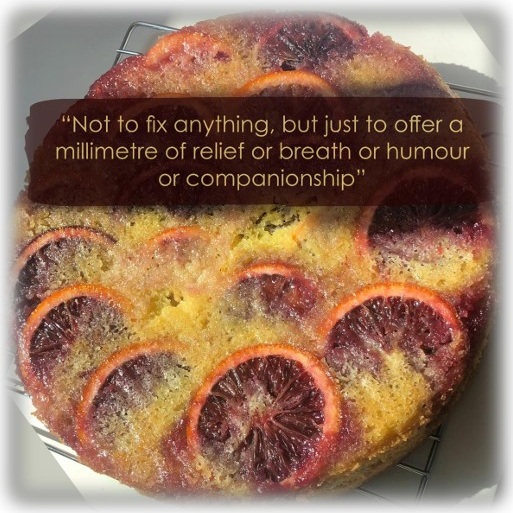
Thank you for listening to this practice note which introduces the document titled not to fix anything, but just to offer a millimeter of relief or breath or humor or companionship.
A collective document about caring for Trans Community My name is Tiffany Sostar. My pronouns are they, them, and I'm a non binary, queer, disabled narrative practitioner and community worker.
I live on Blackfoot land governed by Treaty 7, which was signed in 1877 between the Crown and the sovereign nations of the Siksika and Gainai Pakani, The Yarhe, N.A. first nations, and the Sutina.
This is also home to the Metis Nation of Alberta and to many other Indigenous folks.
This land is colonially known as Calgary, Alberta, Canada.
I'm here as a white settler and an uninvited guest.
There are many people with me in this work and I won't introduce you to all of them.
In this practice note, I'm going to talk about the creation of this document, some of the narrative ideas and practices that informed our work in this project, and some of our hopes for the document.
Two of the people I would like to mention are Elliot Trimble and Nathan Victor Fouz. The three of us are collaborating on a series of narrative projects in support of trans lives, and this document is part of that wider collection of work.
I hope that you will read the document. It is included in this issue of the journal.
One of the pieces of feedback that we received from a few early readers is that it is a very long document and this is true. This document is the result of community conversations, submissions through a digital form, and individual interviews. It has also changed in response to feedback from early readers.
Many voices are included and many different stories.
This project started quite small almost two years ago and was first meant to be a response to the How We Are Avoiding Misgendering Others project on the Dulwich Centre website.
But before that project really got started In November of 2022, Elliott's best friend and adopted sibling, Beckett Noble died.
The project shifted to include, specifically honoring and including Beckett.
In April 2023, Nathan's dear friend Theda Markarian died and the project shifted again to include her.
Both of these cherished Trans Community members were killed by the hate and hostility, targeting and politicization directed at Trans Community, which has only escalated in the last 18 months and which does not seem to be improving.
This history of the project's changing scope is connected to the narrative practice ideas that have shaped the work.
Lorraine hedke and John Winslade's 2017 book the Crafting of Grief describes threading our way through a maze to fold in what gives meaning.
And the shifts in this project have been a process of folding in the relationships and and legacies of Beckett, Theda, and other trans community members who matter to our contributors.
This collective document is one project in a collection of work, and it's one of the first projects that we have completed together.
The choice to start with this particular project, which is specifically about actions of care taken by and with trans community, was an intentional and political choice.
Although this collection of work emerges from a context of grief and hardship, Elliot and I spoke about how important it would be to see evidence of care, to bring forward stories of trans folks as agents of care within dominant social discourses that are so captivated by narrow stories of us as inherently degenerate agents of harm and and or pitiable subjects.
It's incredibly easy right now to see the evidence of the harm such stories amplify.
We can see it in media coverage of trans issues, in increased hostility, in public discourse about trans folks, in laws being proposed and passed that limit access to inclusion and care in medical, sport, and educational contexts, and in so many other places.
But these problem stories are not the only stories out there.
And like David Denborough writes in Retelling the Stories of Our Lives, while we can't always change the stories that others have about us, we can influence the stories we tell about ourselves and those we care about.
This project is an effort to influence the stories that we're telling, to bring into visibility the stories of care, the practices of care, the tangible and specific actions of care that we are taking within our trans communities, to care for ourselves and each other, and that those who care about us are taking in support of our enduring survival and flourishing.
Our project is not about downplaying the intensity of the hostility or about promoting an idea that individuals can escape the violence of our social context by focusing on the positive, but rather about creating a grounding in community and care that the future projects in this collection of work can move forward from. And that might offer some feeling of connection or community to trans folks who read the document and an invitation to actions of care for readers regardless of their gender.
Bringing these stories of care into visibility is about strengthening our connections to preferred storylines or, to use Auntie Barbara Wingard's language, telling our stories in ways that make us stronger.
It's about refusing to have our lives and experiences and relationships defined solely by the problem story of hostility and threat.
By foregrounding care, community and connection, we hoped to create a bit of a safe riverbank position for readers and for ourselves as we move forward into other projects in this collection of work.
In these stories of care, we can feel less alone, less disposable and disregarded, One contributor shared, bearing witness to how many people want to do right and want to make active change and be supportive is does inspire hope.
Another said, I have a lot of skin in the game as a trans woman, and I keep coming away with the feeling that so many people want to do right and really care about this, and it's really heartening for me with everything going on right now.
We wanted this document to take a wide and welcoming view of what care can look like, to stand against discourses that suggest only certain kinds of care are useful, and to invite anyone who comes across the document to feel invited to join us in caring.
We wanted to welcome care whether the actions are small, private, new or otherwise.
We also wanted to make visible the care that happens within trans community and between trans communities, as well as the care that is shared with our communities by cisgender folks.
This was an effort to resist ideas of trans people as needing help and CIS people as offering help, and to instead make visible the more nuanced and interconnected practices of care and to also make visible the ways in which different trans communities have existing skills and practices of caring for and with each other.
This is connected to our hope of resisting a thin or totalizing story of what trans community means or includes.
There is a real risk that in defining the trans community we would erase or render invisible trans folks who don't fit whatever definition we landed on.
It felt vitally important to maintain the narrative practice of seeking communitas or unity and difference, rather than trying to speak with a singular voice about a singular collective experience.
One critically important contribution to the document came from Akhil Lakhani, who shared there are so many communities, including trans people, who are racialized, who live in rural contexts, who are incarcerated, street involved, or otherwise disconnected from structural supports and legitimate trans identities and experiences.
These are communities that governments fail to serve and that have been left or pushed out of queer space.
In times like these, I think we can lose connection with the reality that trans folks and our allies have been supporting each other's mutual existence forever.
And maybe it's hope building to know that communities that have had less structural access have developed a richness of resources and conversations, skills and knowledges, networks of mutual aid and care to support one another in getting our needs met.
There's possibility in connecting to and working to strengthen these mutual aid systems because maybe this loosens our attachment to institutions and strengthens our connections to each other.
I hope that disconnected communities will be motivated to repair or build connections and allow us to orient ourselves toward the movement honoring the work, knowledges and lineages in these communities.
I hope we can remember that our liberations are collectively bound and that this isn't the start of something new, but it is an opportunity for connection.
In the document, we say what this document means when it says trans is any person, any any person who knows or feels or wonders if they are outside the cisgender binary norm.
One participant described the vast expanse of the in between spaces and the experience of walking through a doorway.
On one side of that doorway is the dominant idea that says you're a woman if you're born with certain visible sex characteristics, and a man if you're born with others.
And on the other possibilities beyond imagining.
This is another effort to influence the story we're telling.
In this case, we wanted the document to stand against rigid definitions and to welcome contributors and readers with many different experiences of gender.
We also wanted to intentionally bring attention to the way in which the gender binary and and the language of trans identity, which defines itself in contrast to the cisgender binary norm, is a colonial construct.
I mentioned Beckett and Theda earlier.
For myself, Nathan and Elliot, this project was specifically in honor of these two beloved humans.
There are other people in this project, including Mary, Theta's mom, who are also in these conversations in honor of Beckett or Theta.
But this project wasn't and isn't only about these two specific people.
Sam shared that they are contributing to this project for myself and for every queer and trans person I have ever loved, known or not been lucky enough to know.
Lindsay said, it just felt like the right conversation to be a part of right now, resisting violence and hostility and the way that it's all really connected.
We were hoping to gather a collective response to collective struggle, and there's a section of this document where contributors share who they are here on behalf of Many people were involved in this project because of trans friends, family members, clients, or because this project aligned with their values of justice and care.
We hoped for the project to be relational, not only strengthening and sustaining existing relationships to cherished people both living and no longer living, but also within the community of contributors.
We knew that there were people contributing to the project who were going through immense grief and hardship. We wanted to include as many invitations to connection as possible.
This included regular, though sometimes infrequent, over the years of the project email updates, invitations to community conversations as the project progressed, and inviting outsider witnessing responses before the document was finalized.
Some of the connections that were begun during the project have continued, and we hope that the relationships began here will extend into more projects in this collection of work.
Each of these relational practices was informed by a desire to be accountable and and responsive to the community of contributors in the creation of the document and to create a context within the project itself that might stand against isolation and despair.
We found that there were significant effects for some contributors.
One shared the level of solidarity around this shared experience that has spanned oceans.
I know what that level of loss feels feels like, and there's something deeply moving about that because we're so prone as individuals to suspect or think that we're alone. But there's so much commonality and it doesn't just fit under any simple banner like love. There's grief and anger and histories of abuse in there, but ultimately all of it leads to all of those pieces coming together in an extraordinary way. It gives you some level of peace at the end of the day to just know that it's not just you, it's not just me that's feeling the inequity in the world is unfair and unjust. It's not just me afraid of what's coming.
So much solidarity while still leaving space for individual experiences. End quote.
Another person who responded to the document with outsider witnessing said, I felt loved and held and shouldered up and less alone in reading this precious collection of voices.
For narrative practitioners who read the document, there are a few hopes that we have for how you might use or experience the document.
The first and most significant hope is that if you are working with trans folks who might find something useful in the document, we hope that you'll share it with them.
We hope that you will see in this document that trans folks know what we need and what kinds of care will be most useful.
There's a section in the document that addresses consent focused practices of care and ways of asking questions about what would be useful rather than making assumptions about the kinds of care that we want, need, or will be helped by.
There is a strong discourse currently present in many professional spaces, particularly medical and mental health spaces, that takes a, quote, protective approach to trans care in ways that are not community driven or desired.
It is a foundational idea in narrative practice that people are the experts in their own experience, that communities, as Michael White noted in Narrative Practice and Community Assignments, have a stock of knowledges about life and skills of living that are relevant to addressing the concerns and predicaments faced by the members of those communities.
We hope that you will find support in this document for resisting discourses of outsider expertise if they show up in your professional spaces.
We also hope that you will feel invited to take actions of care with us.
The stories included in this document are not about perfect or pure or ideal care, about heroic care or anything grand.
There is so much space for learning, for small actions, for being alongside.
There are also reflection questions throughout the document, and we hope that you will engage with those questions if they feel useful for you and maybe even bring them into your narrative conversations if they would be supportive.
There are questions about what helps you to take action, questions that can help co construct responses to misgendering with a trans person that you're wanting to support, questions to ask yourself when you feel curious about a trans person's transition experience or something else that might be intrusive to ask questions for deconstructing discourses relevant to trans folks and questions about resisting harm. In our responses to misgendering or hostility, we recognize that resisting, subverting, and sometimes even becoming aware of discourses that contribute to harm can be complex and challenging, even for people within the communities impacted by these discourses.
Being trans, non binary, agender2spirit or otherwise outside the cisgender norm doesn't mean that we're magically outside of these discourses, and you'll find stories of some of our own learning journeys within this document.
This work can be especially complex and challenging when we realize that we've been invited or recruited into cooperation with discourses and ideas or practices that are out of alignment with our values or hopes.
We hope that you feel loved and held and shouldered up by this document and the stories within it that you know you are not alone in grappling with these topics.
For trans community members who may read this document, we hope that you take what feels meaningful and valuable to you and use it in the ways that best support your your ongoing survival and flourishing.
If you do not see something of yourself, your needs, and your ways of expressing care in the world reflected in this document, we hope you feel warmly invited and welcome to connect with us in this ongoing work.
Most of all, we hope to keep co creating the world we all need within the world we all live in that we and all our relations, kin of every imaginable kind, unfurl a future that is kinder, softer and more sustainable, full of the certainty that we love and are loved, care and are cared for.
We hope that future generations tell generous stories of how their transistors endured and resisted difficult times with creative and care filled ways of co being.
We hope that this document is part of that long legacy of care that stretches back as far as gender diverse communities have been around. Which is to say, all the way back to the start and all the way into the future.
[00:20:44] Speaker B: Thank you for listening to this podcast from International Journal of Narrative Therapy and Community Work published by Dulwich Centre Foundation. More about this recording and a treasure trove of articles, videos and multimedia works are available from narrativetherapyjournal.org it's all free to access and share with no login required.
Dulwich Centre is located on the land of the Kaurna people. We acknowledge the traditional owners of country and pay respect to elders past and present.