Episode Transcript
[00:00:00] Speaker A:
Hello and As-salamu alaykum, which is Arabic for May peace be upon you.
My name is Sarah, I am a Muslim woman living in India and I come from one of the southernmost states of of India, a state named Kerala.
I work as a social designer and researcher where I build digital platforms for diverse communities across the world and specifically the Muslim community.
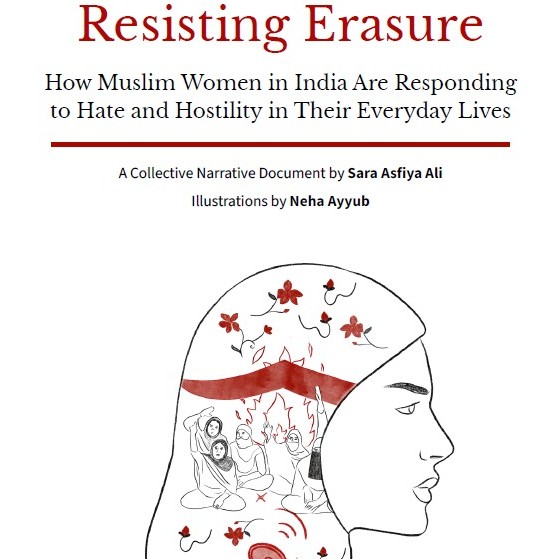
In this audio note I would like to share with you the story of creating this collective narrative document which I co created with 21 Muslim women living across different urban cities in India.
This document emerged from my diploma in Narrative therapy and community work which I completed in 2025 and it centers the voices and the stories of how these Muslim women in India are responding to hate and hostility in their everyday lives.
As a Muslim woman myself, I was born and raised in India and I have lived here all my life, worked, studied in different parts of the country and I call India my home.
Over the years, however, as a Muslim I have felt a growing sense of isolation and grief while living here and these feelings have often come up from a space of anger, a space of grief, fear and a looming helplessness of of witnessing what is happening to the people around me who simply believe in what I believe.
Like many others in my community, I have often carried these feelings with not many spaces where you can talk about them except social media platforms.
And living in India as a Muslim in 2026 means waking up to almost a daily barrage of news of of targeted violence, active deliberate erasure and hostility towards Muslims as well as other marginalized groups in the country, and then continuing to live your everyday life while carrying that weight.
This experience has made me wonder, how are other Muslim women around me holding on?
I began asking how were they experiencing these hardships? How were they protecting what mattered to them and continue to live with dignity amidst all this?
And this curiosity has led me to this work.
This document is grounded in the methodology of collective narrative practice developed by David Denborough from Dulwich Centre, Australia.
Unlike a lot of traditional research approaches that often extract stories for analysis, collective narrative practice is a collaborative and community centered effort and it aims not to produce knowledge about a community, but to create something with and for the community.
Collective narrative practice also documents how people and communities respond to trauma, marginalization and social injustice rather than being passive recipients of that of the harm that they face in their lives.
By bringing together stories into relationship with one another, it makes visible the shared values, skills and knowledges of the community that often remain hidden within. When stories stand alone as individual narratives and this collective voice challenges and resists the individualization of suffering and situates people's lives within a shared social and political context.
And in doing so, it honors or attempts to honor people as orders of their own lives, foregrounding their voices, their collective agency, and their active lived resistance against oppression and harm.
This document was brought about through interviews I conducted with Muslim women between the year 2024 and 2025.
In these conversations, which were often hours long, women spoke to me about their childhoods, their classrooms, their campuses, their neighborhoods, workplaces, family life, motherhood.
They spoke about carrying fear, anger, and a lot of exhaustion of doing very many quiet calculations to navigate very simple everyday realities.
And in the same breath, these women spoke to me about all that they held on to very close to them.
Their values, beliefs, their friendships, their good memories.
In some conversations, I would sit in wonder as women spoke about not only challenging and navigating Islamophobia outside, but also challenging patriarchy within their own community and holding together the many layers of their identities at the same time.
And as you read these stories, I invite you to listen for these for their strength and their resilience and as people making meaning, asserting their agency, and choosing how to live under difficult conditions.
As a Muslim woman myself, many of these stories have felt familiar. At the same time, extremely difficult to listen to.
My position created a sense of safety and trust for the women who spoke to me, and that was very central to this work.
Throughout the process, I was mindful of their safety as well as mine as a Muslim woman living within this hostile environment.
And this shared understanding allowed women to speak openly to me.
They vented, they ranted, and they cried.
There were moments during these conversations when we wept together, and these moments felt so deeply visceral and in many ways so healing.
At the same time, they are so difficult to translate into a written document like this.
The tones, the silences, the pauses, the gasps, and the emotional intensity do not really easily sit on a page.
So some readers who engaged with my early drafts reflected back to me that they so wished they could hear the stories in in the women's actual voices and experience them in a more sensory way.
And as someone who works visually, I think this feedback mattered to me a lot, which is why I invited Neha, who is my friend, a brilliant illustrator and also a participant in the document, who created the beautiful illustrations. Alongside the narratives that you see, we identified images we wanted readers to remember and. And you'll see how some of these images are actually what women are resisting and some are what women are being othered by, and some are what they really hold close to themselves.
Once the document was written, it was also shared back with the women who contributed to the document, and this is a very important part of collective narrative practice. It was important to me that they could hear their own voices in these pages. And many women also shared that they were so grateful that this work was being done, and they were particularly grateful that it was being done by a Muslim woman, because it felt like the community reclaiming its right to speak and tell our stories for ourselves.
The document was also later shared with a small group of readers who were invited to respond as what you call outsider witnesses.
They were asked to write letters back to the women, not to analyze or comment on their stories, but to share what stayed with them and what shifted within them as they read these stories.
Through this outsider witness practice, these stories moved beyond the conversations in which they were initially spoken.
They traveled, they were held by others, and they were returned to the community.
As I come to the end of this note, I want to say that this document belongs to the women who shared their stories with me.
It belongs to me, and it belongs to Muslim women who recognize themselves in these experiences.
And it also belongs to anyone willing to sit with these stories and notice what what we Muslim women of India ask of you as witnesses and listeners.
My hope is that these stories continue to move, be taken up in different contexts and open up more spaces for storytelling, witnessing, and solidarity.
Thank you for listening and for staying with these stories.
[00:10:18] Speaker B: Thank you for listening to this podcast from International Journal of Narrative Therapy and Community Work, published by Dulwich Centre Foundation. More about this recording and a treasure trove of articles, videos and multimedia works are available from narrativetherapyjournal.org it's all free to access and share with no login required.
Dulwich Centre is located on the land of the Kaurna people. We acknowledge the traditional owners of country and pay respect to elders past and present.