Episode Transcript
[00:00:00] Speaker A: Foreign.
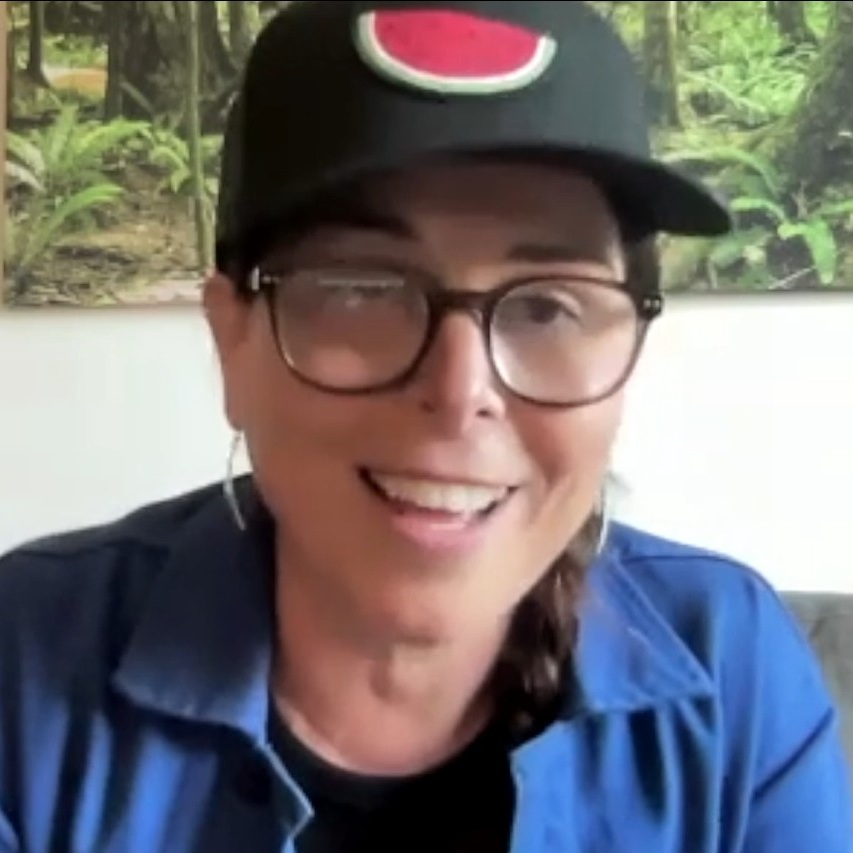
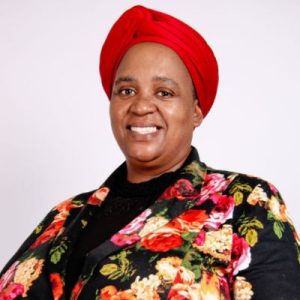
[00:00:11] Speaker B: I go by is Lorraine Greaves. I also use my initials.
And before I more fulsomely introduce myself, I'd love to acknowledge that I'm here in my home, which is on the unseated ancestral homelands of the Musqueam, Squamish, and SLA Youth peoples. Those are the three first nations who've stewarded our land here for a very long time.
I've lived on these lands since birth. I was adopted into an English Scottish family here with the last name Greaves. And in the last 20 years, I've had the blessing of finding my birth family.
So I now know that I've got ancestral ties to a homeland known as the Red river area, Manitoba. That's in the middle of our country.
And prior to that, my ancestors hearkened back to lands that cross into the United States.
Browning, Montana, is one of the key pieces of land where my ancestors come from. And they. They were there for many, many generations before they traveled into the middle of Canada as part of the fur trade.
So I'm Metis. That means I'm mixed indigenous and mixed settler. And my family roots are Cree, Blackfeet, Sk, Scottish and Irish. And my Metis family names are Monroe and Grant.
And maybe I'll talk a little bit about the. The roles or the context that I come to the conversation through.
I'm a parent of a very beautiful two spirit daughter, Larissa. I'm two spirit myself. I could talk about what that means if that's a concept that folks there might not know about.
I'm a clinical counselor. So hold a practice as a helper and hold space for people to hopefully experience liberatory change in conversation and through the actions that we come up with in our sessions.
Done that work for a very long time. And that work brought me into more leadership positions over the years. So in the last decade, I've had the amazing honor to lead a program here in the province of bc, which is where I live in Canada.
And the program I'm leading has worked with community members and healthcare professionals and others to try to make change around transgender health access. And so we started from almost nothing actually going on in terms of our formal healthcare system. There was solo providers working very hard for many years, but not a lot of formal programs. And together we've been able to build up a pretty fulsome network of care that is better today and still a lot of room to grow.
I think it's important for practitioners to always think about the political and even the geopolitical context of our work.
And I Think many of our mainstream training programs really get us to individualize problems in the context of suffering.
In trans health in particular, there's such a gatekeeping role that a lot of so called practitioners and providers have to hold with folks. And it's really challenging because we do rely, at least here where I work and live, we do rely on public funding. The government does fund our healthcare system. It's not privatized.
And in some ways that really limits how liberatory we can be with our practices. You know, we, we have particular so called standards of care that we need to follow. And of course there's a medical aspect to the care for some trans and gender diverse folks.
So I think it's important to name and hold that tension.
We are working in a system that tends to replicate colonial ways. The systems, at least here and probably most places in our world, are a part of late stage capitalism. You know, they're built on colon.
While there's probably been a lot of work in many places to move things towards a more decolonial or indigenized way of working, we are just beginning, if not slipping back right now. And so I think we need to think about our own roles as providers and practitioners around both challenging but also replicating that space. And I think it's a space that constantly recalibrates back to status quo. And that status quo is built on white supremacy, colonization, extraction of resources, including, you know, us as resources.
So how do we resist that, especially in our practices? I think it's about first of all naming those layers of context and remembering those all the time in terms of the ways those might be infiltrating our practice space.
I feel like what we're seeing is new for some of us who are younger and not very new for those who are older or nearing the end of their lives.
You know, I was thinking recently about accounts of colonizers first coming to the lands where some of my family ancestry comes from. And in one case the lands that I mentioned in Montana, around Browning, there's these old anthropological resources that talk about these very strange manly women, you know, who were interpreted to be very off base, you know, not, not practicing womanhood properly, doing things like hunting, tanning hides, playing drums and singing with men looking confusing, maybe looking like men holding wealth.
And you know, this wasn't celebrated in the accounts of those anthropologists. This was totally demonized. And then there became this project to colonize the bodies and the gender expressions of those folks through what is known as our residential school system.
That happened unfortunately all throughout Canada and in many parts of the United States.
So that's not that long ago. Like, that history is very recent. There's relatives in my own life right now who went through those schools.
And so for them, what we're seeing right now isn't new at all. And I would say for many of my indigenous relatives, we're already living this fascism.
Lands have been stolen and continue to be stolen. You know, as to, you know, our relatives continue to be very much harmed by the system that is upheld by white supremacy and colonization.
I think what might feel new is that for folks who haven't had that history in their families, folks who might hold more white privilege or, you know, certain privileges related to benefiting from colonization over the years, I think more people are being captured by some of the current uprising of fascism than perhaps 20 years ago.
And so there might feel like a very alarming new wave of hatred and an alarming new wave of fascism rising. And I do think it's emboldened right now.
But I think we do know a ton about this and that means we know a lot about resisting it too.
I do a lot of supporting other providers, folks who are providing care and support to trans and gender diverse people. It's a lot of what my team does at work.
And a, a common situation I've seen is providers coming forward feeling really concerned about how unwell some of the trans and gender diverse people are that they're seeing in their practice, be it a medical practice or a less medical but more psychosocial support practice space.
Providers coming forward with a lot of alarm about the embodied distress that people are coming forward with and then trying to guess what's wrong with these trans people. Like I've actually heard people say there must be something wrong with being trans because I'm seeing this very huge amount of trans people in my practice deeply suffering, coming forward with not only sort of mental health distress, but also real embodied distress, you know, autoimmune conditions, feeling an embodied sickness and a retreat, you know, isolation, etc, and it's interesting to me, but those providers often forget about the context and aren't bringing up, you know, this must be, and I think immediately this must be in response, probably a trauma response to the emboldened harm and violence that we're seeing very near us and all around us, related to open transphobia, the removal of rights for trans people. You know, there's many locations right now where trans healthcare is being openly challenged. The right of, movement of freedoms, basic human rights of trans people are openly being challenged in court and on the streets.
But I do think that awareness is lower for some and sometimes people mistakenly situate all of that in the body of the person in front of them. And so I found it really useful to very gently and warmly. I do think it's important to warmly receive all the people who are trying to work in this space. We need everybody doing this work as much as we can.
Just ask some really good questions and then also bring forward some of the contextual awareness that I have, you know, which is quite acute because I work directly in the field. And one thing I'll do is bring forward, you know, the number of anti trans pieces of legislation we've seen in certain jurisdictions, pieces of news that, you know, really feature transphobia and just try to do a bit of education on the spot and stay in relationship with that person, but gently try to nudge them away from this individualizing approach and try to get them into the context. And I think there's a light bulb that often goes on because I think generally a lot of providers do know the way trauma plays out in the body, but I am finding that to be missed sometimes. And there's this sort of pathologization of the individual related to gender without remembering what causes that sense of unwellness for people.
I love having conversations about the history of gender diversity all around the world.
There's such beautiful resources and examples of gender diverse people. You know, they're just the existence of being more than two genders all over the world.
Some have been probably so colonized they're hard to find. But you know, luckily we do still have these stories, we have photos, we have lived first person account. So there's really rich resources out there to help bring people into the conversation. And so I often find it useful just to say, did you know?
And I'll use my own two spirit selfhood as an example. And for those who are not from so called Canada, there is a term that we often use in our indigenous spaces called two spirit.
It doesn't necessarily mean two spirit literally, but it's an umbrella term to, to capture the very rich and diverse histories of gender diversity and, and sexual orientation diversity that we have across our amazing many, many, many indigenous peoples of our lands. And so two spirit, it's an umbrella term that many people are getting to know here. And so I'll often use my own story, examples from my own nation and my own return to selfhood, connection to my family, my own adoption story even to talk about the ways that colonization has both ruptured our sense of selfhood, our connection to the land and our families and our ancestry and, and how liberatory the return has been for me upon finding my family, the connection to the lands I come from and you know, I am very privileged to belong to a beautiful ceremony, family and a land.
Really nice five acre piece of land. Actually it's 10 acres in Manitoba that a nonprofit organization called Two Spirits of Manitoba has managed to purchase where Two Spirit Peoples Cultural resurgence, connection to community and kin is completely central to the work that happens on that land and that happens to be the land that my own ancestors come from for quite a few generations. And so I'll often use these stories of what it's been like for me to both have my own journey, returning home really to those lands and being welcomed in and what it's done for me and my wellness, as well as stories of my kin. Because for many of us, you know, we're living the process of sort of decolonization right now as we, you know, remember our families and our ancestors and return to some of these land based practices and these cultural and ceremonial spaces.
So I will use lived experience when appropriate and useful for people. I'll use the stories of others and really invite people in with curiosity to learn more. We Are Allies project does a lot of that and really centers indigenous experience and the fact that two Spirit people are not new. We've been here forever, you know, for as long as we can recall and we're not going anywhere.
The daytime work that I do, my full time job is leading the trans health program that I mentioned. And we have found over the last five years or so, maybe seven, we were finding a real influx of very confusing information coming at us.
In the early days, it was convincing enough. It was sort of this alarm around why so many trans people, why so many trans youth and are we doing the right thing here around the care that we're providing for them?
Um, and you know, some of the content, a lot of it was being circulated online, some of it was very convincing. It looked very credible. It looked like it was very academic. So, you know, in fact it had me pausing and some of my medical care, especially around the medical care of young people, that small group of youth who need trans health care. It all had us wanting to make sure we were doing the best we could and not doing anything wrong. Of course, that said, you know, where I'm working internationally, we've not played a total leadership role, but definitely been an environment where for 30 or 40 years we've been Doing a really good job of this care without concern and with a lot of good benefits in terms of the research that we have in hand.
That said, we found that sort of information flow, and I will say we now know it was mis and disinformation to be growing and growing to the point where we felt we needed to do a project project explicitly focused on taking a look at the online information environment, working with researchers to determine, you know, is this myths and disinformation or are these credible facts?
And then in the event of all that, what do we do to begin to communicate out a more balanced perspective? Because we were finding this miss and disinformation content to be very skewed to the side of removing care, removing safe space, removing ability for young people to be their own persons around their identities and their genders.
So we felt we needed to do something that we hoped would speak to an audience that's in a learning space.
I think we often do really well talking to each other in spaces where we're already sure of things and our perspectives.
I know myself, I live in a bit of a queer trans bubble, I call it, where I have a lot of community members around me who kind of think the same and kind of. We know that we're okay, we know that our genders are okay. But how practiced are we at trying to talk to people who might be very new to experiencing transness or learning about gender diversity?
I know for myself, I do some of this in the counseling space, often with parents. But we got really curious about doing something larger.
So we were very lucky to receive federal money through Health Canada, which is a funding source in our federal government, to do a project where we first worked with researchers to take a look and scan the environment.
So we did that.
We looked at a bunch of online spaces, a lot of the gray literature, a lot of news articles, and that research team basically did enough research to prove that this was a trend, There was a misinformation trend happening. And in fact, we were seeing over 20 key themes of misinformation being repackaged and circulated between many, many, many web spaces. They all were kind of replicating each other. So these are mostly in Canada. And the.
We then had that team work with us and lived experience and professional experts to come up with positive information themes.
We didn't want to get into replicating or repeating the missing disinformation, the untrue stuff, because best practice is to not do so. I think the more we share content that's not true or accurate and alarmist the more people remember it. So we don't amplify any of it.
And the we then built a project where we had these positive information themes that were also backed by research focusing on things like the fact that gender diversity is not new. We have very, very clear examples of it across time and across space that the care is safe and effective.
Pulling research to kind of show that, to underpin the project and that trans young people, gender diverse young people know themselves, you know, that young people do know themselves and they know their genders and it really is best practice to follow their leads.
So with all of that in hand and with some nice funding through our government, we were able to meet with a bunch of storytellers, we called them, in the space.
So people who had some expertise on the topics and wanted to share their voices from a bunch of backgrounds. And the end result is this pretty beautiful currently online web space where we have many indigenous elders and leaders who are important here on our lands for leading in the content that was important to our project is to lead indigenously, speaking about parts of those themes that really resonate for them.
We also invited parents and carers or caregivers in those who look after young people to come and share their perspectives. And we also had a number of young people who are all extremely keen to stand up in the space also come in to share their voices. And so if you go to the web space, you'll find a large number, I think there's over 200 now, video vignettes and clips, allowing someone viewing those clips and listening to them to really learn, start and go wherever you want in the space and hopefully come to one's own conclusion, you know, about this content. We, we don't want to tell people what to think, but hoping that by hearing these voices and stories and seeing the research and that really important lived expertise and those wisdoms that people with that well rounded info hand might make a more balanced decision about, you know, how and what to do if a young person in their lives were to come forward and say, hey, I'm thinking about my gender, I might be trans, I might be gender queer.
Our key audience for this resource really is those adults, those parents, those caregivers, the counselors, you know, those folks that a youth might come forward to for some help. We want those folks to feel like they know what to do and where to go, at least for a first conversation and not to shut that down, not to shame that youth and not to turn them away due to mis and disinformation.
Well, our Resource is very specific to this space in these lands. So I'll say some of the examples of gender diversity are very tied to, you know, where we are.
But I think as an example, they're very nice short clips.
Our next wave of work is actually how to trying to figure out, like, how do we curate these resources, kind of get them off a static website, but into more relational context so that people can use bits and pieces to spark conversations. Like you're saying, so that's where we're headed next.
But I have actually done that. I've done that and I've also shown people there's a PBS website here that actually has a pin map of the world. I've shown parents this before and it's quite an outdated web space now. I really hope someone does something like this and updates it. But you can go to that pin map and just say, oh, where is your family from? Let's see if we can find something. And it doesn't have every place in the world, but it is a very good opener. So you can go to this pin map and kind of click on the link and there you'll find the very unique example of the gender diverse people of that land.
So often just try to bring people to a space that they'll resonate with. And so I think you've got to figure out what will meet the needs of the person you're with.
But certainly the we are ally space does show that there's a very big coalition, not only of storytellers, but there's also, if you go to the bottom section of the web page, there's a place where you can look at our partnerships and you'll see that across this entire nation, a huge number of very massive health organizations, children's hospitals, you name it. Like many, many, many small to large organizations have actually signed on to fully back and endorse the content of that space. And for me, that's really meaningful because there has been such a threatening kind of set of messages sent from some very dominant spaces to have us kind of, you know, question, you know, the validity, the, the benefits of this care, even that the care should exist. And I think when you kind of click and see that there's this wall, a very, very formal organization saying, you know, we're, we're behind all of this.
I think it really helps calm people down. I've certainly see parents kind of their shoulders go down and they've calmed down and they said, okay, this must be legitimate.
And then they and kind of click into the spaces that resonate for them. And so again, I think it's very basic counseling stuff at meeting people where they are, trying to figure out what the information need is. But certainly if someone's got a relative who is more connected to the culture and the history of the culture and open to the conversation, trying to find that individual in the family or in the community or in the community resource space who might know a little bit more about the particular history for that person person and where they come from. And you know, I know there are some, I've got some folks in my own life who come from lands where colonization it really has been so successful that they haven't found that word for the gender diverse person or that example. But they do know ex it exists, I think by way of knowing it exists other places. And so I think we can borrow on the histories that we can find and we can find the ones kind of nearest to our people, you know, if we can't find it for ourselves, ourselves. And I know, yeah, even in here, in, in, in Canada, we've got many, many, many indigenous nations. Some have that word in that example, some don't.
But I think we have enough evidence by way of those examples that we do have that there's a lot of confidence that this has been a thing that was not demonized in most nations.
It was pretty accepted. And like, like we do in many cultural spaces, we often share cross culturally in order to kind of find that liberation too. And so I think there's a lot of opportunity.
Well, I think it's important to know that alarm and urgency is a tactic of colonization. And it's a tactic that is built to have us be destabilized, get isolated, get overwhelmed and shut down and not have our best thinking hat on.
And it is all coming at us and it feels really fast and really hard.
So I think just knowing it's a tactic of the colonizers of fascism and being alert to it so that we don't get captured in it. Because when we work from an alarmed space and a sense of urgency, we are not thinking long game, we're not thinking longitudinally and we're all, we're not our best selves when we're working that way. It actually is a lot of rework and make work when we're working from a place of urgency.
That said, I think it's important to keep tabs on what truly is urgent and where we show up with urgency. So having really good discernment about like an emergency rally and showing up there when it does really matter, you know, versus some piece of disinformation that came on your desk and you're suddenly freaking out about it.
So I think, you know, like I said, knowing that there is a ton of mis and disinformation being used to support the fascist project right now, it's actually become much more open that we know this now. We. We don't have to dig too hard to know and find it.
And then getting really savvy about discerning and then I think getting hyper local. Like I know here we've been trying to actually get into rooms together, kind of go old school, get offline if we can. And I know not all can.
You know, there's reasons why online is very accessible for some. So having very solid online connection spaces, but also when we can, physical connection, remembering to not get isolated in the alarm because I think we can just get overwhelmed and want to go to bed.
And also knowing when we need to get rest and take space as well. Like, I actually just recently took a longer leave than I've taken in a long time just to catch a breath because I did find myself working at such a rapid pace in part to do this last project that I was speaking about. It had sort of time boxed funding and quite a race to the finish line.
And sometimes we can't avoid that. But noting that we need to come in and out and take care of ourselves and our bodies.
For me, I've been really working on getting to the land, getting to ceremony, getting to my kin. So I'm traveling back to the lands that my ancestors come from three times this summer just to be there, because I really need that support and that connection.
So finding what helps nourish you and your communities and remembering to stay in community.
One other piece that I've been really paying attention to is the way that these forces can get into our own close communities and attempt to divide us. I think it's important to know that historically when fascism is uprising, there's movement breaking that occurs. And there's all kinds of ways that fascism and these divisive factors can get in our own spaces and kind of get us fighting at each other or at odds with each other. And so I've been really alert to that and really thinking about how we repair, we redress, but we stay in relationship with each other at this time because we are not very strong if we're all by ourselves. And so trying to be with others as much as we can, noting it can be hard and overwhelming. And sometimes we do frankly have to go to bed just for a day or two.
It's up and down.
But I've been really trying to make sure I am in connection both with real humans, but also with the. The plants, the trees, the. The beautiful lands that I walk on every day.
That's the stuff that I think brings me longevity and more fortitude in a time that's tough like this one.
Especially if you are a.
An ally or someone who's standing in allyship alongside our transgender, diverse and queer communities.
Our queer trans providers are working so hard and are very tired.
And I know here it's really hard to find a provider like someone to sit and talk with who just feels culturally safe, like, who gets us. And so the more anyone who's got the heart to learn and come closer to our peoples.
We really need you. And it's okay to be a learner. We all make mistakes. I make mistakes all the time. I think it's how we move through them and how we. You're just accountable and move forward.
And I think the more you get to know that person in front of you, you'll be so enriched by, you know, if you're someone who hasn't had a lot of exposure to gender diversity or, you know, trans folks, queer folks, I think your life will be totally enriched by getting to know our beautiful, expressive and creative communities.
And so I'm really hoping that you're excited to be on a learning journey. And I certainly hope that more people come into the fold and stand in support because we certainly do need spaces to get out right now and to have that healing support because it. It is a time of heightened harm. And, you know, like I said, many providers, especially the queer trans ones, do need to take breaks and also rest and restore ourselves. And we also need support. And so I think all the ways, you know, be it cooking and providing food for a neighbor who's not feeling well, thinking about those really local care actions, those little practices that make a difference, the little ways we can check in on each other.
Those are the things I'm thinking about right now.
[00:29:35] Speaker A: Now, Thank you for listening to this podcast from International Journal of Narrative Therapy and Community Work, published by Dulwich Centre Foundation. More about this recording and a treasure trove of articles, videos and multimedia works are available from narrativetherapyjournal.org it's all free to access and share with no login required.
Dulwich Centre is located on the land of the Kaurna people. We acknowledge the traditional owners of country and pay respect to elders past and present.