Episode Transcript
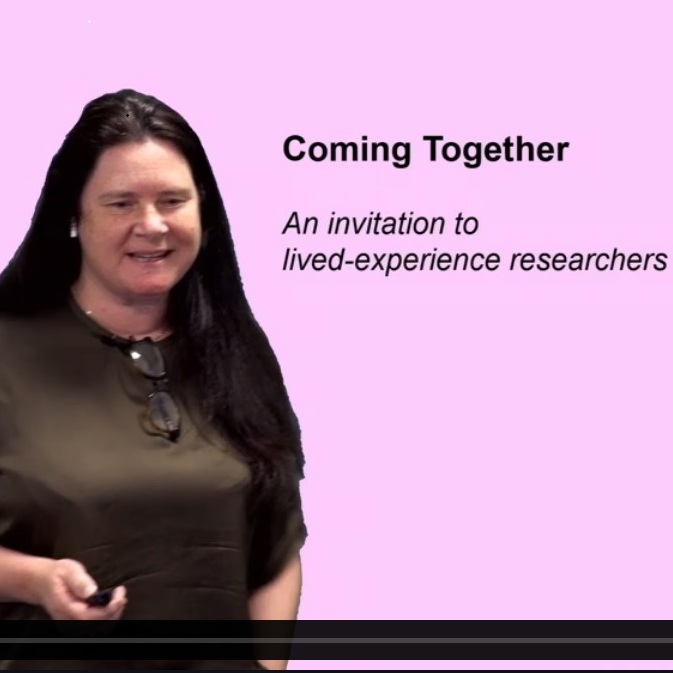
[00:00:11] Speaker A: It's really lovely to be here and to see so many familiar faces and to be thinking about invitation a sense of coming together. I'm not going to be talking that much about my research today, just more about insider research and what could be possible for other practitioners as well. Just to locate myself. If any of you don't know about my project was I was did a PhD at Melbourne University with women who had lost a male partner to suicide.
And that was very intentional because that was my lived experience and I needed to think about the framework which was a feminist framework and that's why I kept it to speaking to women. I just wanted to share some of my thinking so far and I would love if we could add to this thinking. What are some of the feminist ethics that guided sharing of experience in my project what did I have to think about? What did I even from where to have the conversations. I made it very open.
Would you like me to come to you? Would you like to meet in a cafe near you? Would you like me to come to your house?
I always try to bring some an offering. So thinking about what would feel the best, most comfortable way to have the conversations, what does having lived experience, what does that bring to the conversations and what does that make possible?
What are some of the complexities in using lived experience in research and how do we navigate these?
How can we hold ourselves accountable to the people we are speaking with? And we've been talking a lot about that over the last two days and I think one thing that really shone through in many people's projects was how can we honour the people that we're speaking with and what can we contribute back.
I just wanted to share a little bit about my thinking and I looking forward to maybe others input on this and maybe we can do this collectively and create a different kind of table or we can add more things. But I drew from the work of Kitzinger and Wilkinson who talked about there's different ways to think about lived experience research, there's minimizing which would be fit into more traditional psychology research.
And that would be where you. I think you'd stay like the blank slate you wouldn't share.
And the cons of that I thought were that it masks power and it would feel really dishonest.
So I willingly declared my insider status and this was also a principle of feminist ethics of care.
And that I really found and I'll share a few quotes at the end from what women said, but that women could find strength by sharing. So I never centered my story the Women were at the center, but I used discernment in what I shared and that so many women said what a difference it made to have conversations, not just my sharing my experiences, but other women's experiences.
And I thought about how weird would it be to not disclose.
That would just be, I think, a little off.
The other, this was my preferred, was utilizing my lived experience very carefully so that doing that can insider experience to gain access to, you know, I had that on my invitation that I am a woman who lost her husband. And I think. I don't know for sure, but some women did say that's what made them want to come speak to me.
And in utilizing it, I really thought about that.
I had to be careful that there was this commonality. We'd lost our husbands to suicide, but there was going to be so much diversity in our experiences, depending on our locations, our class.
The women I spoke to were all heterosexual women, white, different in ages.
Most of the women had children.
So there was.
There was going to be diversity, though, in our experiences.
And one of the things that I think was really important was that I did a lot of follow up.
So after the interviews I would follow up to see how it went and then later on the women were able to check that their stories were represented in a way that fit for them. And the reason I followed up was I did a practice with Ruth Plusnick here at Dulwich and I practiced going through the questions with Ruth in front of a class here at Dulwich. And Ruth, the next day wrote me an email saying, you know, how are you?
How was that for you?
What was that like for you, doing that in front of the class? And it meant so much to me. And I remember making a note saying, don't forget to follow up after with the women.
So that was my way of. I used the utilising.
And then Kitzinger and Wilkinson talked about maximizing which is which you center your story.
And I think that would be more of an autoethnography approach.
And I didn't choose to do that. I endeavored to represent all the women's voices, including my own. But my own voice was more in naming discourses. So with that I wrote from the third person.
And how that worked was reading the mainstream literature, I got to see some themes, such as that people bereaved by suicide often experience stigma, taboo.
What was it like to be a woman who'd lost a male partner to suicide?
The histories of suicide, such as suicide used to be a sin and then a crime. So these were themes that I saw. And then I used my own lived experience to create stories.
So a lived experience way of. Instead of just having a sentence, people experience stigma. Like, what does that really mean? I create a little vignette written in the third person, and that's based on memory work. And the reason I chose that was that the writing in the third person, you see all your surroundings, you can see the politics of your experience, whereas when you're writing in the first person, it's. It can be harder to see your surroundings. I just wanted to share a quick example.
So this, this is a vignette around Taboo.
Marnie would dread having to tell people how her husband had died.
She had formulated an answer that put her husband in the best possible light.
She described her husband as a writer, very talented, a beautiful father, and he struggled to be here.
She could not say the word suicide and neither could her children.
When they moved to Australia, the third oldest son was having tennis lessons and he came home shaken and confused. His teacher had asked where his father was and her son answered that he was working in Los Angeles as a writer. Marnie tried to preempt these conversations, but she couldn't always. It caused the children great discomfort.
And I think in these vignettes we get more of a sense, a rich telling of what the dominant discourses were.
And it's something I'm a little bit proud of in this work because I had to dig a bit deep to recall some of these very discomfort experiences.
But when I knew that it would support other women, I was happy to do it.
[00:09:35] Speaker B: Thank you for listening to this podcast from International Journal of Narrative Therapy and Community Work, published by Dulwich Center Foundation.
More about this recording and a treasure trove of articles, videos and multimedia works are available from narrativetherapyjournal.org it's all free to access and share with no login required.
Dulwich Centre is located on the land of the Kaurna people. We acknowledge the traditional owners of country and pay respect to elders past and present.